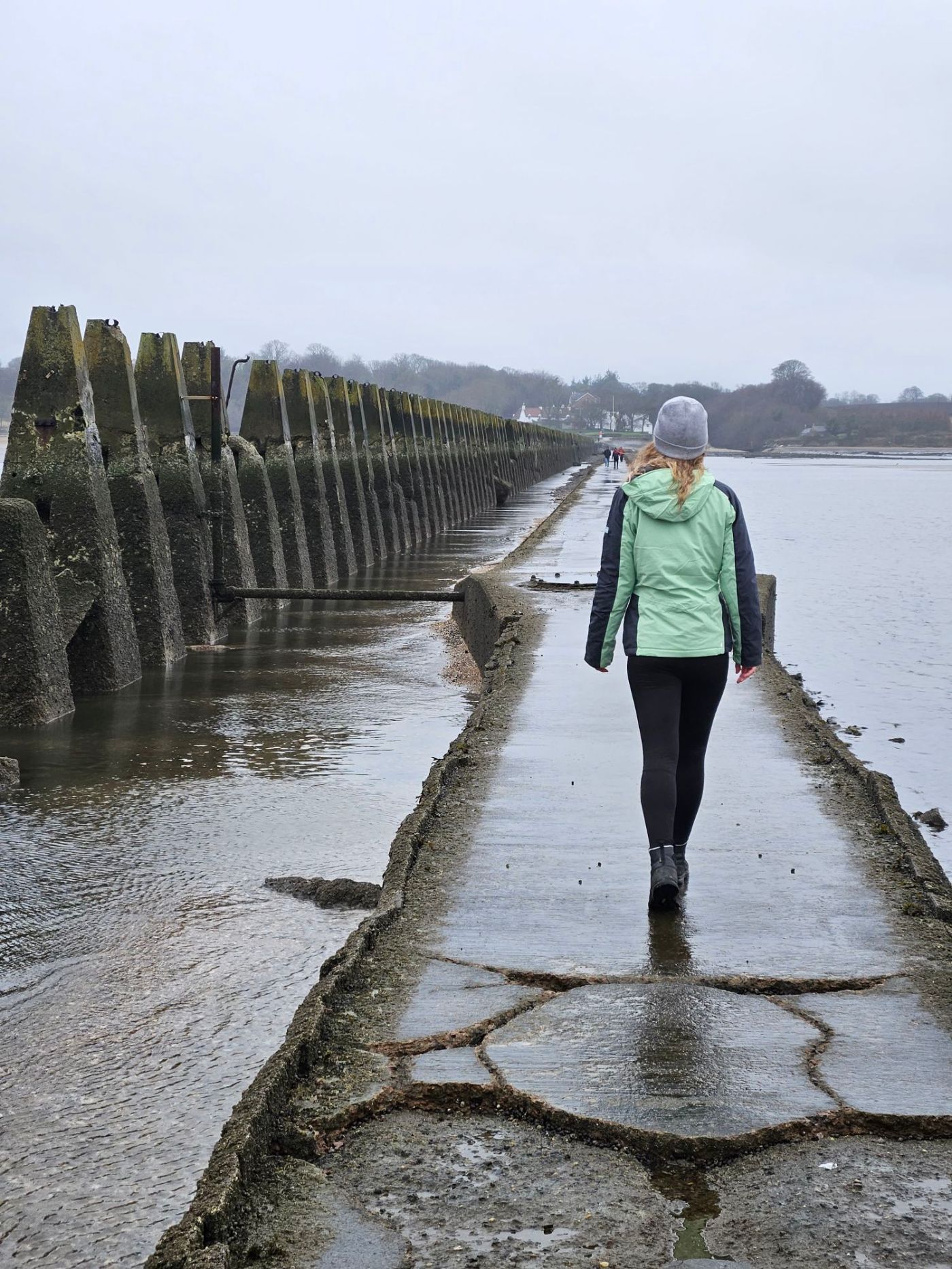
Having been in Edinburgh for a few months now, my list of nearby places that I want to explore, has been growing. Cramond Island was somewhere I’d been pretty intrigued about, but due to only being accessible at low tide, it’s taken a while for the right tide to fall at a convenient time. Local, low cost adventures are a favourite of mine, so if you’re in the area, this is definitely somewhere I’d try and check out.
Access
Cramond Island is located just outside of Edinburgh, and is one of several islands in the Firth of Forth (an estuary). There is a large free car park by Cramond beach, and it’s also possible to get to there via bus from the city centre.
The island is accessible by foot, via a causeway that is only crossable at low tide. The coastguards recommend only attempting the crossing during the two hours either side of low tide. You can check the days tide times online here, and you can also find a notice board before joining the causeway, which will have the current safe crossing times on. There’s plenty to explore on the island, so make sure you give yourself enough time to cross back before the tide comes in – it’s quite common for visitors to get stranded.


The History
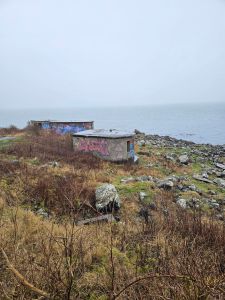
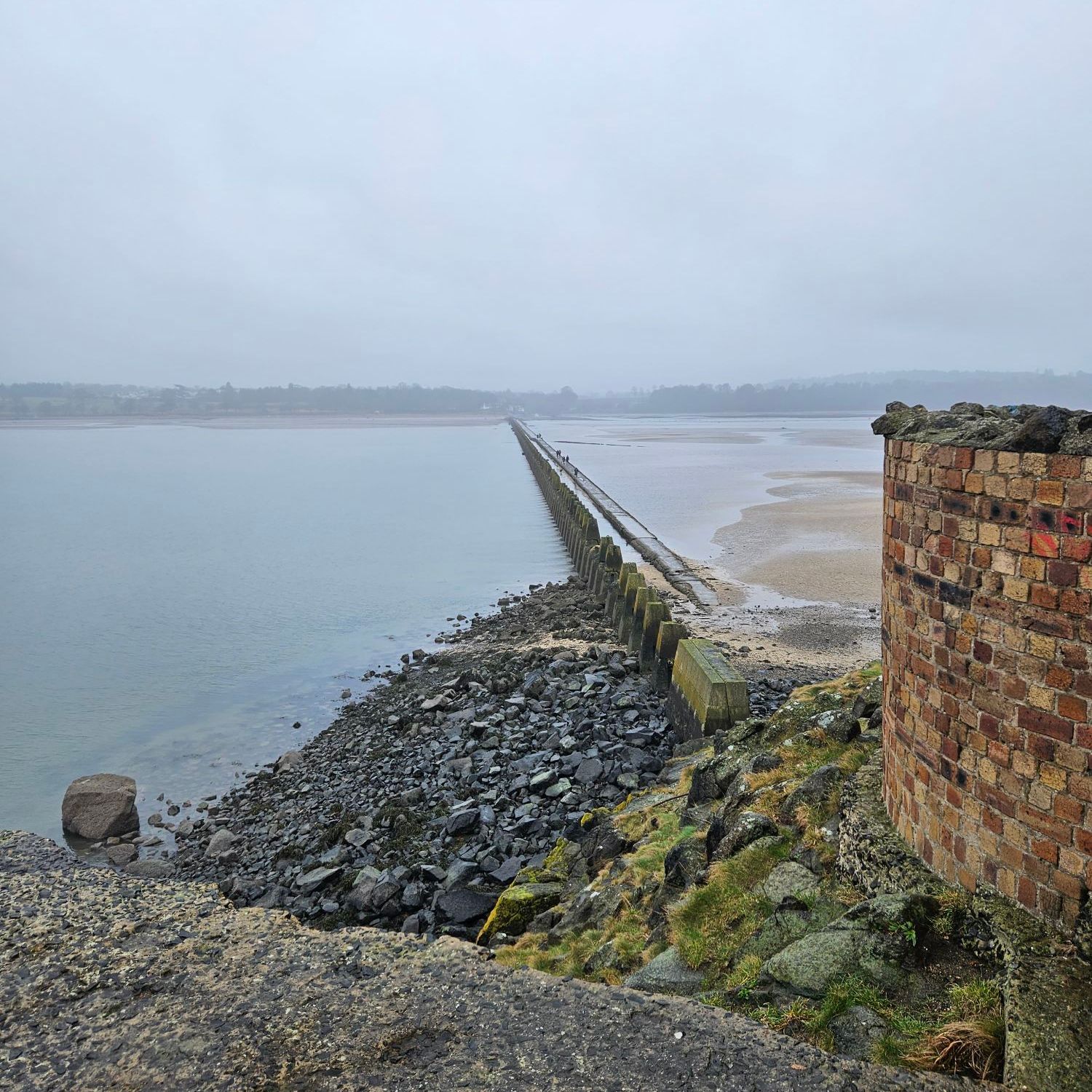
The island itself is around 1/2 a km long, and sits around 1.6km out to sea. On a clear day there are views out to Granton, Leith, North Queensferry and the Forth Rail Bridge, unfortunately we picked a pretty dull day so couldn’t see too far, but the clouds made it rather atmospheric.
It’s now uninhabited, but old Ordnance Survey maps show a farmstead at the north of the island, and parts of the building can still be seen hidden under the ivy. It is also believed that the island may have been used by the Romans, as Cramond itself was a Roman outpost.
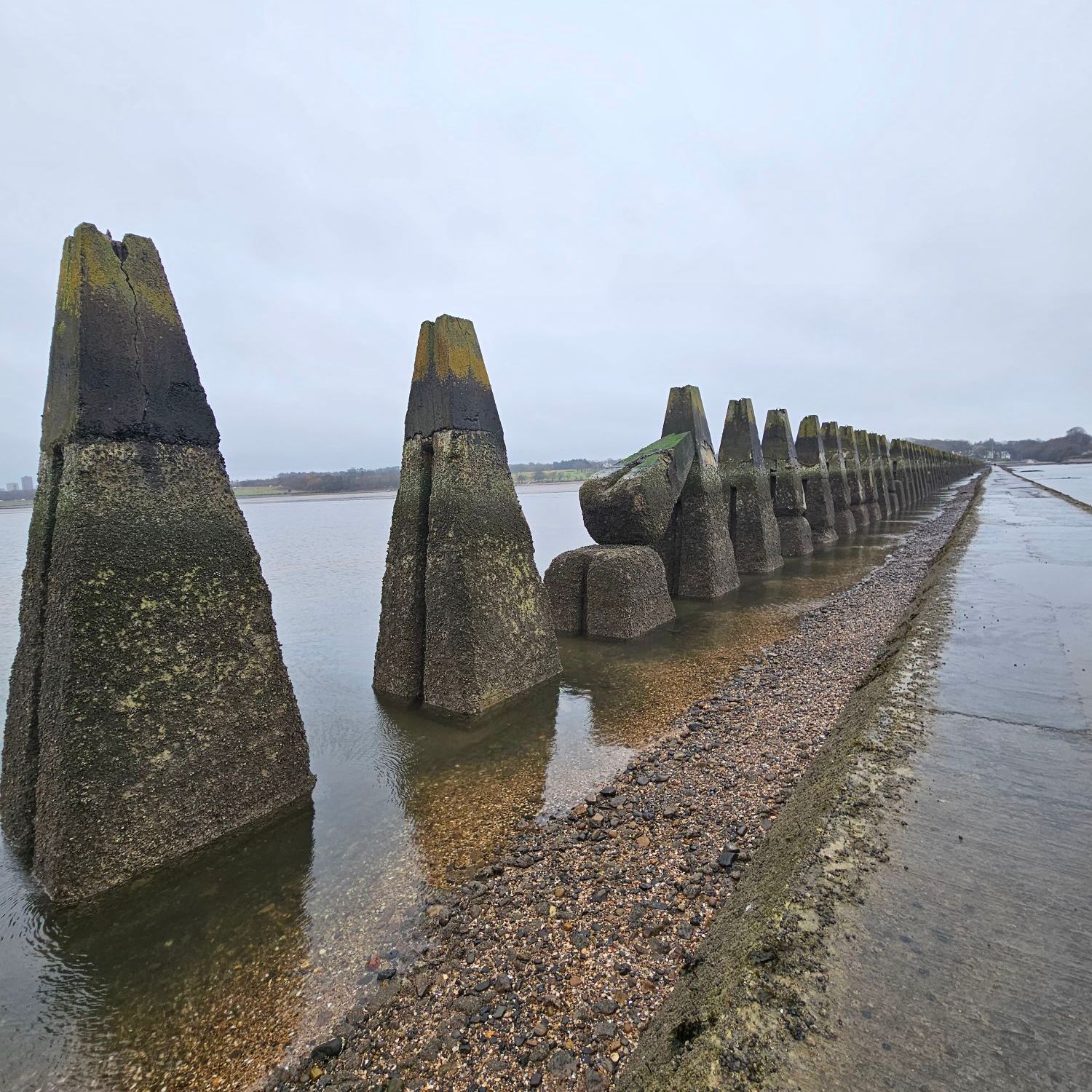
The island was used in both WWI and WWII for anti-submarine nets, and it was armed with several mounted guns during the wars. The ominous concrete pylons that line the causeway were a barrier to stop boats. and you can find bunkers scattered all over the island, which though covered in graffiti, are open to explore.
The Terrain
There is a mix of terrain on the island, from sand, to concrete, to pure mud. We visited on a pretty soggy, February day, so the ground was probably a little muddier underfoot than at other times. I’d recommend wearing walking shoes, or shoes with good grip that you don’t mind getting dirty. The causeway can also be a little slippy in places – so watch out.
There are several different paths around the island and a free app like komoot is a great way to keep a track of where you are and where you’ve already been. Cramond island is only small though, so its pretty hard to get lost.
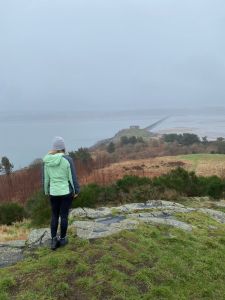
This was a great way to spend the afternoon, and somewhere I’d highly recommend visiting. It was pretty quiet on a rainy winter day, but I’ve heard it can get extremely busy in the summer (as with any tourist hot spots) so plan accordingly.
If you do decide to visit the island, please make sure you check the tide times and ensure that have you enough time to get back across the causeway. It is quite common for visitors to not leave themselves enough time and they then need to rely on services, such as the coastguard, to rescue them,
Happy adventuring x
*The jacket featured in photos is the Regatta Highton Stretch Waterproof Jacket and was kindly gifted.
 Lisa Outdoors
Leave a comment